Wondering whether Novato feels more like classic Marin or a newer North Bay growth story? The honest answer is both. If you are thinking about buying or selling here, it helps to understand how Novato’s housing mix changes from one area to another, because age, layout, access, and future development can shape daily life just as much as price. Let’s dive in.
Novato has more than one housing story
Novato is the northernmost city in Marin County and covers about 28 square miles. The city’s planning documents describe a lower-density setting with open space that contributes to its rural atmosphere.
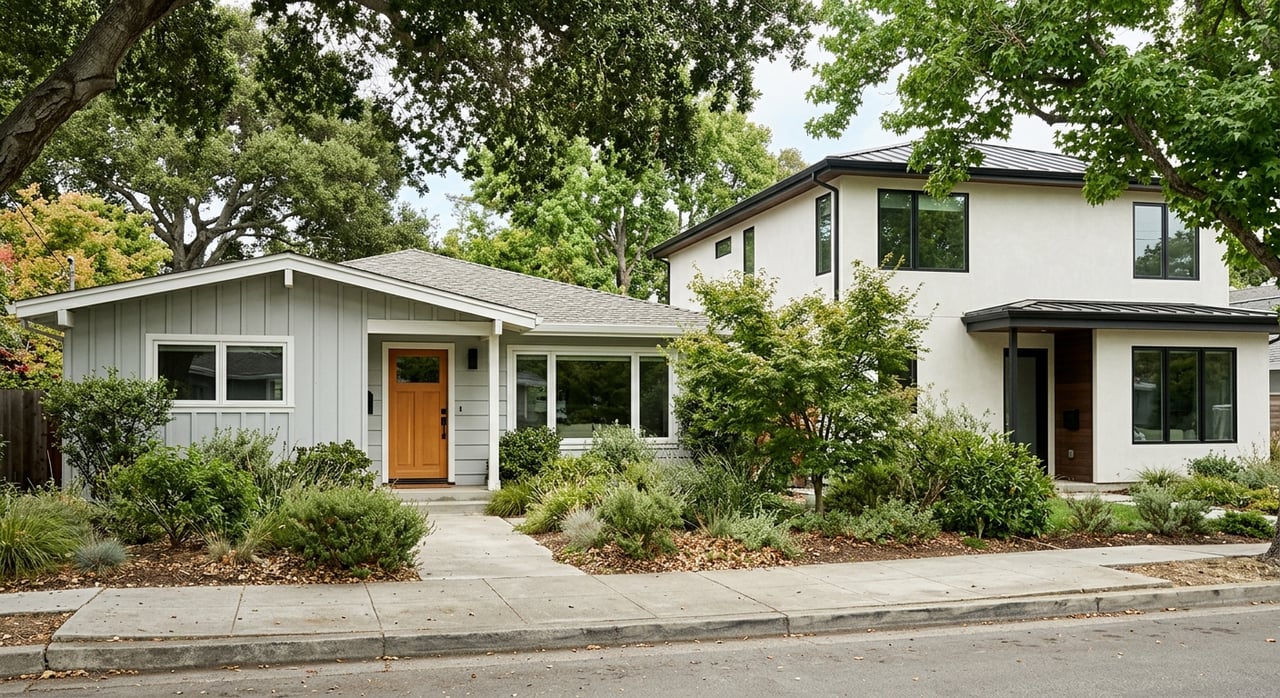
That big physical footprint helps explain why Novato does not read like a one-style market. Across the city, you will find a mix of older homes near downtown, postwar and later suburban areas, apartments and attached housing, and newer redevelopment zones on the edges.
The housing stock is mixed not just by style, but also by age and type. City housing analysis described roughly 58% detached single-family homes, 17% attached single-family homes, 21% multifamily units, and 3% mobile homes. It also found that about 64% of homes were built after 1970, while only about 6% to 8% were built before 1950.
That means if you picture Novato as all vintage homes, you will miss a large part of the market. If you picture it as all newer suburban housing, you will miss the older core that gives parts of the city a very different feel.
Older Novato centers on downtown areas
If you want the clearest look at Novato’s older character, start around downtown and Old Town. The Downtown Specific Plan describes this area as the social, commercial, and historic heart of the community, with a development pattern and architectural variety that reflect growth from the 19th century to the present.
City design guidance points to East Grant and Old Town buildings with Victorian-era false-front storefronts, Mission Revival styles, and structures tied to early agricultural uses such as board-and-batten and corrugated metal buildings. Street trees along Grant, Fifth, Redwood, and Sherman add to the mature streetscape.
For buyers, that often translates into a setting that feels more established and layered over time. For sellers, it helps explain why homes near the older core are often evaluated not just by square footage, but also by location, setting, and how the property fits into the surrounding fabric.
Northwest Quadrant shows the older residential pattern
One of the best examples of Novato’s older residential fabric is the Northwest Quadrant, generally north of Grant Avenue and between First and Seventh Streets. The city describes it as a mostly flat, walkable area near downtown.
This area mixes smaller single-family homes from the first half of the 20th century with two-story apartment buildings from the 1960s and 1970s. Existing development is one or two stories, and densities range from 6 to 39 units per acre.
The city has also studied a form-based code here to preserve the smaller-scale character while allowing compatible redevelopment such as duplexes, triplexes, fourplexes, and bungalow courts. That tells you something important about Novato’s approach in older areas: the goal is not simply change or no change, but change that fits the scale already in place.
What older areas may offer you
If you are drawn to older parts of Novato, you may value:
- A more established street pattern near downtown
- Mature trees and a more layered architectural setting
- Smaller-scale homes mixed with attached or multifamily housing
- Walkability to parts of downtown and nearby transit connections
These are general area traits, not rigid neighborhood rules. The city notes that neighborhood names are approximate labels, not hard legal boundaries.
Newer Novato is often shaped by planned redevelopment
On the newer side of the spectrum, Hamilton stands out as one of Novato’s clearest planned redevelopment stories. The city received land at Hamilton Field through the Federal Lands to Parks program and later invested more than $5 million to redevelop about 25 acres, creating amenities that include a renovated amphitheater, pool, ballfields, a community center, and play areas.
A later land exchange also preserved 93 acres of hills and wetlands around the site. In practical terms, Hamilton reflects a more contemporary planning pattern where residential areas and amenities are shaped together rather than added gradually over many decades.
For buyers comparing options, Hamilton often represents a different experience from the older downtown-adjacent areas. Instead of a tighter historic core, you are looking at a planned area influenced by redevelopment, open space preservation, and broader site design.
San Marin points to future housing change
San Marin offers another view of where Novato is heading. In 2024, the city amended the former Fireman’s Fund campus to allow residential redevelopment, and the master plan contemplates 1,000 to 1,300 dwellings on 44 acres.
The concept includes two- and three-story single-family buildings, up to five-story multifamily buildings, greenbelts, and a pedestrian connection to the San Marin SMART station. This is different from the older small-lot and mid-century pattern found closer to the historic core.
For anyone watching Novato’s long-term housing picture, this matters. It shows how some of the city’s edge areas are increasingly being shaped by large, coordinated redevelopment and transit-adjacent planning.
Valley Oaks adds another contemporary example
Valley Oaks is another current example of newer residential development in Novato. The city describes the project as including 61 attached and detached single-family homes, 45 JADUs, and 20 townhome-style condominiums on a 37.6-acre site.
About 20 acres are planned as open space, with heights of 30 to 45 feet and homes around 1,800 to 3,000 square feet. For buyers, this is a reminder that newer housing in Novato can come in several forms, not just detached homes, but also attached products and condominium-style options within a planned setting.
Lot size and housing form vary widely
One mistake people make is assuming there is a typical Novato lot or a single standard neighborhood layout. In reality, the city’s zoning framework allows for a wide range of lot sizes and densities depending on district.
Low-density districts such as RR, RVL, and R1 can range from 80,000-square-foot hillside and rural lots to 7,500-square-foot valley-floor lots. Medium-density districts such as R4, R5, R10, and R20 range roughly from 4,500 to 10,000 square feet minimum depending on zone.
The city also notes that the R1 district comprises most single-family neighborhoods in Novato. So when you compare homes, it is more accurate to think in terms of specific area patterns and zoning context, not a citywide norm.
Commute and access can change your choice
In Novato, location often shapes your daily routine as much as the home itself. The city describes Novato as a logistical hub at the intersection of U.S. 101 and California 37, and the city has three SMART stations.
For transit-oriented buyers, the Novato Downtown station is near Grant Avenue and about a half-mile from the Novato Transit Center, which is served by Marin Transit and Golden Gate Transit. The Hamilton and San Marin stations also connect with Marin Transit and Golden Gate Transit.
In broad terms, downtown and the Northwest Quadrant may appeal to people who want closer access to walkable commercial areas and transit. Hamilton and San Marin may appeal to those who prefer newer housing forms and straightforward regional car access. Those are general patterns, not hard rules, but they are useful when narrowing your search.
What this means if you are buying
If you are buying in Novato, it helps to decide early which trade-offs matter most to you. The city offers meaningful variety, so your best fit may depend on how you weigh character, home age, layout, transit, and future development around you.
A simple way to frame your search is to ask:
- Do you want an older setting near downtown activity?
- Do you prefer a more planned environment with newer housing forms?
- How important are SMART access, transit connections, or Highway 101 convenience?
- Are you open to attached housing, condominiums, or multifamily-adjacent areas?
- Do you want a setting shaped by mature streetscapes or newer site planning?
These questions can quickly narrow the field and save time. In a city with this much range, clarity on lifestyle and location often matters as much as budget.
What this means if you are selling
If you are selling in Novato, your home’s area context is part of the story you bring to market. A downtown-adjacent property may need a different positioning strategy than a home in a newer planned area, even if both are attractive in their own way.
That is where thoughtful preparation and pricing become especially important. Buyers respond differently to mature settings, smaller-scale older homes, newer planned communities, and transit-adjacent locations, so the strongest marketing usually highlights the specific advantages of your immediate area rather than relying on broad citywide language.
For some sellers, that may mean emphasizing setting, access, and scale. For others, it may mean coordinating presentation improvements before launch so the home speaks clearly to the buyer profile most likely to respond.
Novato’s mix is part of its appeal
What makes Novato interesting is not that it fits one mold, but that it does not. You can see the contrast between historic downtown blocks, older residential pockets near the core, and newer redevelopment areas like Hamilton, San Marin, and Valley Oaks.
That range gives buyers more than one path into the market and gives sellers more than one way to stand out. The key is understanding which version of Novato best matches your goals, then building your strategy around that reality.
If you are weighing a move, planning a sale, or simply trying to understand where your property fits in Novato’s evolving housing story, Kristen Palmer can help you make sense of the options with calm, local guidance.
FAQs
What types of homes are common in Novato?
- Novato has a mixed housing stock that includes detached single-family homes, attached single-family homes, multifamily housing, and mobile homes, with detached single-family homes making up the largest share.
Where are the older residential areas in Novato?
- Some of the clearest older areas are near downtown and in the Northwest Quadrant, where you will find smaller early- to mid-20th-century homes mixed with later apartment buildings.
Which Novato areas have newer development patterns?
- Hamilton, San Marin redevelopment areas, and Valley Oaks are among the clearest examples of newer or more contemporary planned development in Novato.
How should buyers compare older and newer Novato neighborhoods?
- Focus on practical differences such as home age, layout, nearby transit, Highway 101 access, development pattern, and whether you prefer a mature downtown setting or a newer planned area.
Are Novato neighborhood boundaries official?
- No. The city notes that neighborhood names are approximate labels rather than hard legal boundaries, so it is best to think of them as general areas.
Does Novato have transit options beyond driving?
- Yes. Novato has three SMART stations, and the Downtown, Hamilton, and San Marin stations connect with Marin Transit and Golden Gate Transit services.