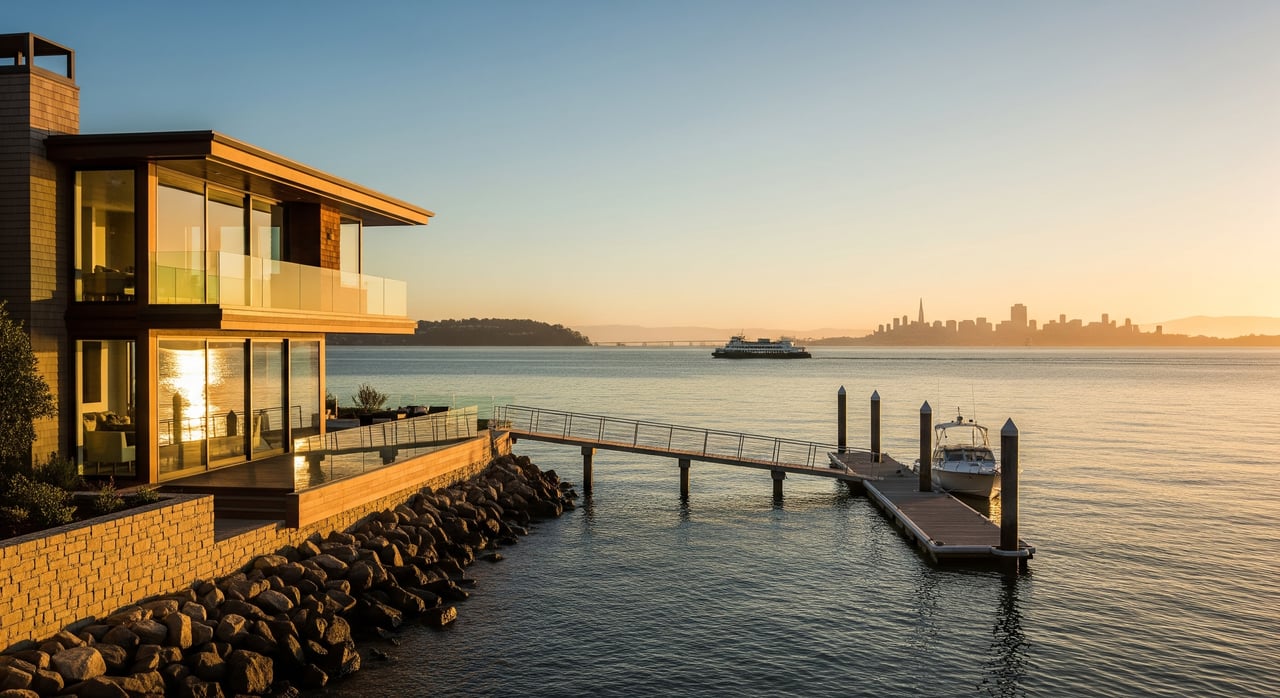
Does a 30-minute bay cruise to work change how buyers shop in Tiburon? If you split time between Marin and San Francisco, the ferry can feel like a built-in lifestyle upgrade, not just a commute. You want to understand whether that convenience and experience influence prices, days on market, and who competes for homes near the landing. This guide breaks down how the ferry shapes demand, the real trade-offs to consider, and practical steps for buyers and sellers. Let’s dive in.
Tiburon ferry commute at a glance
Golden Gate Ferry runs passenger service between downtown Tiburon and the San Francisco Ferry Building, with additional service to Angel Island. Schedules change seasonally, and Tiburon typically has fewer weekday sailings than Larkspur. Check the current timetable on the Golden Gate Ferry schedules page for the latest departures and advisories: Golden Gate Ferry schedules and maps.
A typical sail time between Tiburon and the Ferry Building is about 25 to 35 minutes, depending on the run. You can see representative travel times here: Tiburon to San Francisco Ferry Building travel time. Golden Gate Ferry accepts Clipper, and fares are adjusted periodically; toll and transit price changes in 2025 affected many commuters’ cost calculations. For context on recent increases, see this update on tolls and fares: Golden Gate toll and transit fare changes.
Parking near the Tiburon landing includes municipal lots and metered street options with limited long-term availability and some monthly permits. Review locations, rules, and permit details before you rely on driving to the dock: Tiburon parking near the ferry.
Why ferry access shapes home demand
- Predictability and calm: The ferry offers a set schedule and a consistent trip, which many buyers view as lower stress than driving over the bridge in traffic.
- Time well spent: You can read, work, or decompress on the water, which makes the commute feel productive or restorative.
- Reach to San Francisco jobs: Reliable access to the Ferry Building broadens the pool of buyers who work in the city but want Marin living.
- Lifestyle value: Proximity to the landing pairs with downtown Tiburon amenities and waterfront recreation. For many, the commute benefit blends with a premium lifestyle choice.
What the data and trends say
System ridership fell during the pandemic and has rebounded in recent fiscal years, with patterns that include weekday peaks and weekend tourism. Tiburon’s route serves both commuters and visitors, and ridership remains lower than Larkspur’s high-frequency service. You can explore the trend lines in the agency’s statistics: Golden Gate Ferry ridership statistics.
Tiburon also has a large work-from-home population compared with typical U.S. communities, which shifts daily ferry dependency to a hybrid or occasional model. That hybrid pattern still values a solid second option for city access. See the town’s broader work and commute profile here: DataUSA Tiburon profile.
Local market snapshots consistently place Belvedere Tiburon among Marin’s upper-end markets, with multi‑million‑dollar medians and low inventory. These conditions align with high demand for limited coastal homes. For a current snapshot, review: Belvedere Tiburon market trends.
Practical trade-offs to consider
- Schedule and frequency: Tiburon’s sailings are useful if your hours match departures. Midday and late-evening options are more limited than Larkspur’s. Always confirm the latest schedule: Golden Gate Ferry schedules and maps.
- Total cost of commuting: Factor ferry fare, parking, rideshare or bike to the dock, and occasional bridge tolls. Recent toll and fare changes can shift the math for marginal commuters: Toll and fare changes overview.
- Parking and last-mile logistics: Spaces near the landing are finite, and some lots require permits. Biking and walking help, but plan for seasonality and special events: Tiburon parking guide.
- Tourism and seasonality: Weekends, summer, and special events can affect boarding times and the overall experience, which matters if you rely on the ferry multiple days per week. See ridership trends: Ferry ridership statistics.
Who benefits most from ferry access
- San Francisco–based professionals who want a predictable, pleasant commute a few days a week.
- Hybrid workers who value a reliable alternative when office days pop up.
- Buyers who prioritize downtown walkability and waterfront amenities along with city access.
- Occasional commuters who prefer to avoid peak bridge traffic when possible.
Neighborhood impacts and pricing nuance
Academic research finds that proximity to frequent, reliable transit often shows up as a price premium, but the size and significance vary by city and mode. With ferries, it can be hard to separate pure transit value from waterfront and amenity value, which are already capitalized into prices. For a balanced review, see this peer‑reviewed overview: Transit and property value evidence.
In Tiburon, homes within an easy walk of the landing may attract a wider buyer pool and sell faster in some cycles, yet waterfront views, lot position, and property quality often drive most of the variance. When you evaluate a specific home, compare recent neighborhood sales on a like‑for‑like basis and focus on price per square foot, days on market, and buyer competition. Market trackers confirm the area’s strong price levels and limited supply: Belvedere Tiburon market trends.
Smart steps for Tiburon buyers
- Map your actual commute. Test an office day using your likely sailing and return time. If you need flexibility, compare Tiburon sailings with Larkspur’s higher-frequency options on the same page: Golden Gate Ferry schedules and maps.
- Plan your last mile. If you will park, confirm permit options and typical availability. If you will walk or bike, measure the route and lighting. Review rules here: Tiburon parking near the ferry.
- Price the whole commute. Add fares, parking, and occasional tolls to see true monthly cost: Golden Gate toll and transit fare changes.
- Compare by micro‑location. Evaluate similar homes by distance to the landing, views, and condition rather than relying on a single premium percentage.
Strategic moves for Tiburon sellers
- Lead with the commute story. In your listing copy and photography, highlight proximity to the landing, walk scores, and sample door‑to‑dock times.
- Stage for hybrid work. Show a focused workspace and a relaxed indoor‑outdoor setting that fits a part‑time commuter’s lifestyle.
- Offer practical details. Provide buyers with a sailing snapshot, nearby coffee and dining, and parking information to reduce friction.
- Consider timing. If buyer traffic aligns with tourism season, plan for open houses and private showings that account for ferry crowds.
Larkspur, Tiburon, or driving? Quick guide
- Tiburon ferry: Best if you live near the landing or enjoy walkable downtown access, and your office days align with sailings.
- Larkspur ferry: Best for peak-hour frequency, larger parking, and more flexibility on return times. Check both terminals on the same schedules page: Golden Gate Ferry schedules and maps.
- Driving over the bridge: Maximum schedule control, but account for congestion and tolls. Weigh occasional driving against your ferry costs to see what truly fits your routine: Toll and fare changes overview.
Bottom line
Tiburon’s ferry commute does influence home demand, mainly by expanding the buyer pool that can pair Marin living with San Francisco access and by elevating the daily experience of getting to work. The effect shows up most clearly when a home’s location, walkability, and waterfront lifestyle all line up. Your best move is to test your real commute, price the full cost, and compare homes by micro‑location and condition rather than assuming a universal “ferry premium.”
If you are weighing a Tiburon purchase or planning a sale, get calm, local guidance from a small team that handles the details from preparation to closing. Start a conversation with Kristen Palmer to align your strategy with today’s buyers and the realities of the ferry commute.
FAQs
How long is the Tiburon ferry ride to San Francisco?
- Typical sail times are about 25 to 35 minutes depending on the departure; check current trips here: Tiburon to Ferry Building time.
How many weekday Tiburon sailings are there right now?
- Schedules change seasonally; confirm the latest weekday departures on the official page: Golden Gate Ferry schedules and maps.
Do homes near the Tiburon ferry landing sell for more?
- Sometimes, but results vary by view, lot, and property quality; use local comps and recent trends as your guide: Belvedere Tiburon market trends and see nuance in the research on transit premiums: Transit and property values.
Where can you park for the Tiburon ferry?
- Municipal lots and metered street spaces sit near the landing, with limited long-term options and some monthly permits; review current rules: Tiburon parking near the ferry.
Is the Tiburon ferry faster than driving during rush hour?
- It depends on departure times, your last-mile to the dock, traffic, and toll costs; compare a door‑to‑door office day using the schedule and recent toll updates: Golden Gate Ferry schedules and toll and fare changes.
Who benefits most from Tiburon’s ferry access when buying a home?
- Hybrid workers and San Francisco–based professionals gain predictable, pleasant access to the city, while many residents also work from home and use the ferry occasionally: Tiburon work and commute profile.