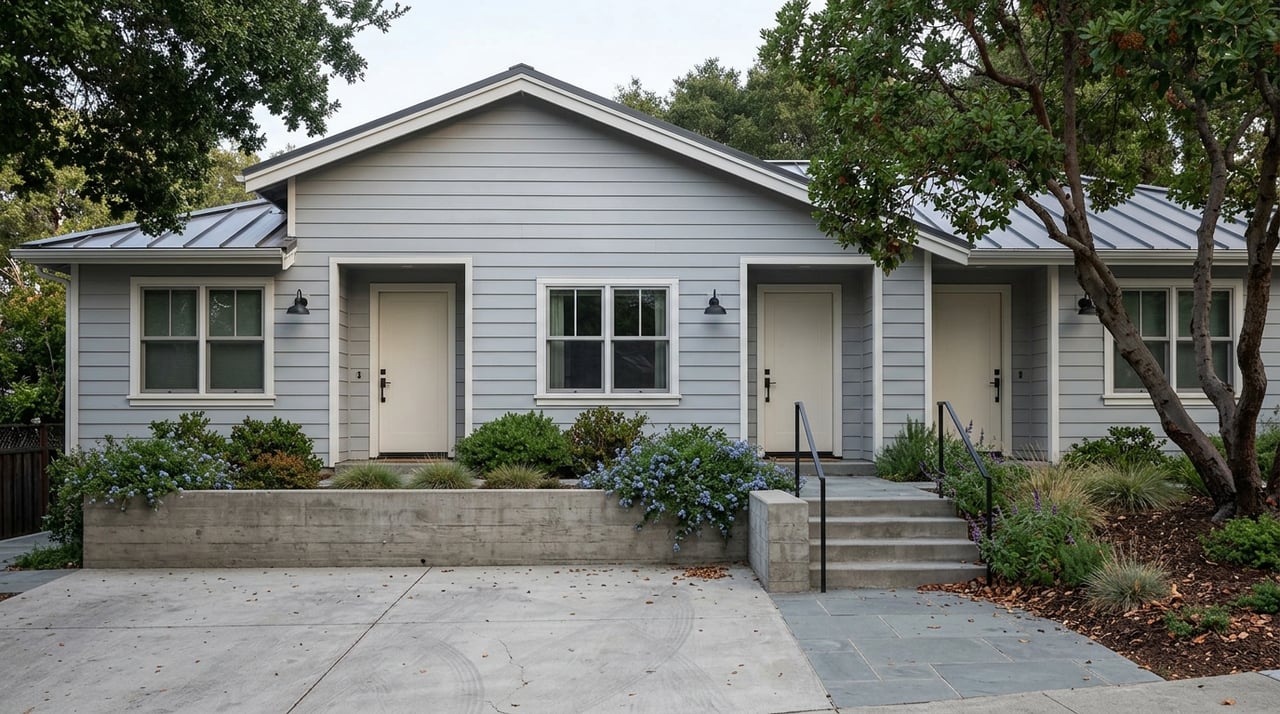
If you own a rental in San Rafael, you may be sitting on substantial equity and wondering whether that asset still fits your goals. Maybe the property needs more hands-on management than you want, or maybe you are looking for a different North Bay market with a lower entry price. A 1031 exchange can help you reposition that equity without taking a straight taxable sale today. Here’s what to know before you make a move.
What a 1031 exchange does
A 1031 exchange allows you to defer capital gain when you exchange real property held for investment or productive use in a trade or business for other like-kind real property held for investment or business use. In practical terms, that can mean selling a San Rafael rental and acquiring another U.S. investment property, such as a rental home, condo, apartment building, or land.
The key point is that this is a tax deferral strategy, not a tax eraser. If you later sell without another qualifying exchange, the deferred gain may become taxable. If you receive cash back, non-like-kind property, or do not fully replace debt, you may also create taxable boot in the current transaction.
Why San Rafael owners consider repositioning
San Rafael owners often have a different question than “Should I sell?” The better question may be, “Does this rental still match how I want to invest?” That is where repositioning comes in.
Recent market data shows why this conversation is coming up more often. Zillow reports an average home value of about $1,345,517 in San Rafael, compared with about $910,428 in Petaluma, while average rent is about $2,999 in San Rafael and $2,758 in Petaluma. That price gap can make some owners look at whether they can redeploy equity into a lower-cost North Bay property while staying invested in real estate.
At the same time, this is not a distressed market where bargains are falling from the sky. Marin County’s median sale price was $1.6 million over the three months ending May 2026, with homes selling in about 21 days and a 104.2% sale-to-list ratio. In other words, if you plan to exchange out of San Rafael, you should expect competition on the buy side too.
Common repositioning goals
Every owner’s plan is different, but a few themes come up often when discussing a San Rafael rental exchange.
Reduce day-to-day management
You may want to trade an older rental for a newer property or for a property type that may involve fewer maintenance demands, such as a condo or townhome. That does not automatically make ownership simple, but it can change the kind of work and oversight involved.
Shift to another North Bay market
Some owners want to stay close to Marin while exploring a different submarket. For example, exchanging a San Rafael rental into Petaluma can work under 1031 rules if both properties are U.S. real property held for investment or business use.
Rebalance your portfolio
You may want to move from one asset into multiple properties, or from multiple headaches into one more streamlined holding. The IRS allows exchanges involving multiple properties as long as the requirements are met.
San Rafael rules that can affect your planning
Before you list a rental in San Rafael, local operating rules matter. They can influence your timing, tenant communication, and what a buyer may evaluate during diligence.
San Rafael has a mandatory mediation program that applies to all rental units in the city. It can be triggered by rent increases above 5% within a 12-month period, and the city notes that this program is not rent control.
Landlords must also provide a Notice of Tenant Rights with rent increase notices. In addition, San Rafael inspects rental properties with three or more units at least once every five years.
If low-income tenants are required to move because of development or renovations, they may qualify for relocation assistance. The city requires a 60-day notice and states the payment is equal to two months’ rent in qualifying cases. These are the kinds of details that can shape your sale timing and your buyer pool.
California details to keep in mind
California currently conforms to Section 1031, but state-specific reporting can matter depending on where you buy next. If you exchange California property for out-of-state replacement property and California-source gain remains deferred, the Franchise Tax Board requires Form 3840.
That means a San Rafael owner who stays in California generally follows the same federal timing rules without that ongoing out-of-state reporting trigger. But if your exchange leaves California, this should be part of your planning conversation with your tax advisor early, not late.
California withholding at escrow can also come into play. The Franchise Tax Board says a qualified intermediary is treated as the buyer for withholding purposes in a deferred like-kind exchange, and California generally requires withholding on California real estate transfers unless a qualified intermediary is involved.
The deadlines are strict
This is where many exchanges succeed or fail. In a deferred exchange, you must identify replacement property within 45 days after the sale of your relinquished property, and you must receive the replacement property within 180 days or by the due date of your tax return, including extensions, whichever is earlier.
These deadlines are rigid. If you start thinking about replacement options only after your San Rafael rental closes, you may be putting unnecessary pressure on the process.
Build your team before you list
The most effective exchange planning usually starts before the property goes live. That does not mean you need every answer on day one, but it does mean you should have the right people aligned before marketing begins.
A practical planning team often includes:
- Your tax advisor
- A qualified intermediary
- Your escrow and title team
- Your real estate agent
Starting early gives you time to review likely replacement options, discuss debt replacement, and think through timing. It also helps you avoid a rushed search during the 45-day identification period.
How replacement-property screening should work
A replacement property should fit both the 1031 rules and your real-world goals. Those are not always the same thing.
You might find a property that qualifies for the exchange but still comes with operating requirements you do not want. For example, if your replacement property remains in San Rafael, the city’s rental rules and inspection program may still affect your ownership experience.
That is why screening should go beyond price alone. Consider:
- Property type and maintenance expectations
- Local rent and operating conditions
- Whether the asset matches your timeline and risk tolerance
- Whether debt replacement and total value will support full deferral goals
A San Rafael-to-North Bay example
Say you own an older San Rafael rental that has appreciated significantly. You may decide to exchange into a lower-entry-cost North Bay property, such as a rental in Petaluma, while keeping your investment capital working in real estate.
That kind of move can make sense if you want to unlock equity from a higher-value asset and reposition into a market with a different cost basis. But it is not a shortcut around due diligence. You still need to evaluate tenant demand, rent levels, operating realities, and whether the replacement property truly supports your long-term plan.
Mistakes to avoid
Even well-prepared owners can run into problems if they treat a 1031 exchange like a normal sale with an optional add-on. It works better when the exchange structure drives the timeline from the start.
Here are a few common mistakes to avoid:
- Waiting until escrow to start replacement-property research
- Assuming any real estate purchase will qualify
- Forgetting that receiving cash back can create taxable boot
- Reducing debt without understanding the tax impact
- Overlooking local rental rules in the destination market
- Leaving California without planning for Form 3840 reporting
Why process matters as much as price
A successful exchange is not just about selling high and buying low. It is about coordinating timing, tax rules, market conditions, and operational fit so the next property serves you better than the last one.
That is especially true in Marin and the wider North Bay, where pricing, competition, and local regulations can vary meaningfully from one city to the next. When you approach the transaction with a clear plan, you give yourself more flexibility and fewer surprises.
If you are considering whether a San Rafael rental still fits your investment goals, a calm, well-coordinated plan can make all the difference. For thoughtful guidance on timing, positioning, and 1031 strategy in Marin and the North Bay, connect with Kristen Palmer.
FAQs
Can you exchange a San Rafael rental into Petaluma?
- Yes. If both properties are U.S. real property held for investment or productive use in a trade or business, the exchange can qualify.
Does a San Rafael 1031 exchange eliminate taxes?
- No. A 1031 exchange defers gain rather than erasing it, unless a later transaction also qualifies for deferral.
What are the deadlines for a San Rafael 1031 exchange?
- In a deferred exchange, you must identify replacement property within 45 days after transferring the relinquished property and receive it within 180 days, or by your tax return due date including extensions, if earlier.
Can you buy more than one replacement property in a 1031 exchange?
- Yes. The IRS allows exchanges involving multiple properties as long as the requirements are satisfied.
What happens if you receive cash back in a 1031 exchange?
- Cash back may be treated as taxable boot, which can trigger current gain recognition.
What San Rafael rental rules should owners consider before exchanging?
- Owners should account for the city’s mandatory mediation program, Notice of Tenant Rights requirements with rent increase notices, inspection rules for properties with three or more units, and possible relocation assistance obligations in qualifying cases.